





Good fidget toys for school are quiet, small and plain: putty, a squeeze ball or a stretchy wrist band that keeps a pupil’s hands busy while they listen, without catching anyone else’s eye. This guide is for teachers, teaching assistants (TAs), SENCOs (special educational needs coordinators) and parents. It covers choosing classroom fidgets, which ones make a noise, chews, seating, ready-made fidget bags, class rules and how to introduce fidgets without singling a child out.
Prices change, so we have not listed them. Browse all our fidget toys, or our ADHD toys for fidgets, timers, seating and chews in one place.
How to choose fidget toys for school
A classroom fidget has one job: to give restless hands something to do while the lesson carries on. Check any fidget against this list.
- Quiet. Squeezing and stretching make far less noise than clicking or popping. If the next desk can hear it, it will bother someone.
- Small. It fits in one hand, a pencil case or a pocket.
- Hard to throw or pull apart. One-piece fidgets stay in the hand. Bouncy balls fly, and loose parts come apart.
- Easy to wipe. Rubber, silicone and smooth plastic wipe clean. Keep fluffy or fabric fidgets for one child.
- Right for the age. Check the age mark on the product page: plenty of fidgets are 3+ and a few are 5+. For a pupil who still mouths things, offer a chew instead of a fidget, under constant adult supervision.
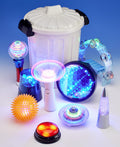
- Not a show. Lights, spinners and toys with faces draw every eye on the table. Save light-up toys for breaks or the calm corner.
- No strong smell. Scented putty can bother the pupil sitting next to it.
Tip: If the child has an occupational therapist (OT), ask them which fidgets suit that child, then let the pupil choose between two or three.
Quiet fidget toys for the classroom
Putty, squeeze toys and stretchy fidgets work by touch, and none of their product pages below mentions a sound. A pupil can use one in their lap while they look at the board.

Putty and squeeze toys
- Crazy Aaron’s Thinking Putty, mini tin: pocket-sized putty to stretch and squeeze, which goes back in its tin after the lesson. Designs are chosen at random unless you ask for one. Age 3+, and often ordered by schools and nurseries.
- Atomic Bead Stretchy Stress Ball: a 75mm ball of micro beads that pushes back firmly when squeezed, in a tougher rubber cover than a plastic-covered stress ball. Colours may vary.
Stretchy, textured and twisty fidgets
- UV Spiky Wrist Fidget Bands, set of 4: stretchy rubber bands, 65mm long, covered in short spikes. Worn on the wrist, a band stays off the floor.
- Tactile Wrist Squigglet: hundreds of soft, floppy tentacles to pull and stretch, held in the hand or worn on the wrist. It is 120mm across.
- Fidget Slinky Springs, set of 4: four small slinkies, 50mm high, that stretch from hand to hand. Ages 3+.
- Relax DNA Tangle: a twisting tangle with a soft rubber feel and textured dots, 175mm long. Age 3+.
Fidgets that make a noise
Their product pages say these make a sound, so think about who sits nearby.
- Anti-Stress Fidget Cube: six sides to click, glide, flip, roll, spin and rub. Three buttons click audibly, two push silently and the ball and socket clicks, so show the pupil the two silent buttons. Often ordered by schools and nurseries.
- Push ‘POP’ Bubble Fidget Toy: press the bubbles for a slight popping sound, then flip it over and start again. It is 130mm across and washable.
- Popping Tubes, set of 2: chunky tubes that make a gentle popping sound as they stretch. Age 3+.
Tip: Try a new fidget at your own desk during a quiet lesson. If the pupil beside you would hear it, choose something squeezier.
Chewy pencil toppers and chew necklaces
Some pupils chew pencil ends, sleeves or collars. A chew made for chewing gives them something better than a soggy cuff. Putty and gel balls are not made for chewing.

- Ark’s Brick Stick Chewable Pencil Topper: solid at one end for chewing and hollow at the other to fit a standard pen or pencil, with large bumps on one side and small ones on the other. It is 65mm long, comes with an eraser-less pencil and is sold in orange or blue, both firm.
- Chewy Chew Buddy Stick Man: a 95mm stick-man chew pendant with a safety lanyard, which its product page suggests for non-aggressive chewers. Often ordered by schools and nurseries.
- Ark’s Robo Chewable Necklace: a 64mm robot with textured knobs and dials on adjustable breakaway cords, in three strengths.
Supervision: We recommend all chews are used under constant adult supervision. Keep each chew for one pupil, check it every day, and stop using it if it is torn, cracked or bitten through. If the child has an OT, ask them which chew suits that child.
See all our chew toys and chewy necklaces.
Fidgets for movement and sitting
Some pupils fidget with their whole body: rocking, tipping their chair or kneeling up. A seat that moves a little lets them wriggle where they sit.

- ‘Wobble’ Air Cushion, small: a blue, inflated, textured cushion, 350mm across, for a classroom chair or the carpet. Often ordered by schools and nurseries.
- Sit On Wedge: a 260mm square wedge for sitting on the floor, for example at carpet time.
- Fit Chair: a gym ball held in a chair frame, so the pupil can bounce and move from side to side. The product page suggests it for children who tip back on their seats.
- Forty Wheel Foot Massager: a foot roller with 40 textured rubber wheels, about 28.5cm x 20cm, that sits under the desk. Its product page says to use it seated, on a stable surface.
Plan movement breaks too: handing out books, taking a message or a whole-class stretch between tasks. Many schools also run a short sensory circuit first thing in the morning.
Safety: These seating pages give no age mark or weight limit: follow each page’s guidance, supervise pupils on a new seat and start with short spells. For an older or heavier pupil, contact us first.
Browse all our wobble cushions and sensory seating.
Fidget bags and kits for school
A ready-made fidget bag for school gives a pupil a small choice of their own. The contents below are as listed on each product page.

- Going to School Personal Kit: Fidget Resources: a storage bag for a cloakroom peg or book bag, holding a Bendy Monster, a Rainbow Fidget Ball, a Knitting Ball, a Spiky Wrist Band, a Discovery Bag and a Push ‘POP’ Bubble Fidget, for one pupil to keep as their own. Age 3+.
- Fidget Bag: a 270mm x 220mm bag with pockets that fasten with a zip, poppers, a lace, a buckle, Velcro and a button. Inside are a Wrist Squigglet, Bendy Man, Puffer Ball, Squishimal, 2 Nuts & Bolts, Koosh Ball, Push n Pop Mat, Knitting Ball, Finger Fidget Rainbow Ball, Jointed Monster and Atomic Bead Stress Ball. Often ordered by schools and nurseries. Its product page gives no age mark, so contact us before buying it for younger children.
- Concentration & Fidget Exploration Bag: a bigger set for a class or a special educational needs (SEN) base, with an Air Cushion, 2 Bendy Men, an Original Mighty Tangle, Wrist Squigglets, 3 Dinki Glitter Tubes, a Colourful Caterpillar, a Glitter Ball, a Flexi Monster, a Wavy Timer, a Floating Fish Aquarium, a Lacing Shoe, Animal Matching Squares, Air Infusions and AromaCards. It comes in a storage bag with a contents list and ideas for use, and any out-of-stock item is replaced with one of the same value and relevance.
Tip: Before a kit goes to a pupil, take out anything that does not suit them, such as a noisy or scented item. For a pupil who still mouths, choose a chew instead.
See all our Going to School Personal Kits, including calming, tactile, visual and emotions versions.
Class rules: a tool, not a toy
Agree the rules before the first fidget comes out, keep them short, and use the same words every time.
- Say what it is for. “A fidget is a tool for your hands while you listen. It is not a toy, so we don’t throw it, share it or show it off.”
- Agree where it lives. A named tray, pencil case or kit bag, and back in its place at the end of the lesson.
- Agree when it is used. For example at carpet time and while listening or reading, but not in practical work or PE.
- Agree what happens if it becomes a distraction. If it is thrown, pulled apart or turned into a game, it goes back for the rest of the lesson, without a telling-off, and the pupil tries again next time.
- Swap, don’t share. If a fidget does not suit the pupil, swap it for another from the box rather than passing fidgets around.
- Keep it clean. One fidget per pupil. Wipe hard fidgets regularly, and throw away anything torn, leaking or chewed.
Tip: Write the rules on a card with a picture for each one, and keep it in the fidget box.
Introducing fidgets without singling anyone out
- Teach the whole class. Explain fidgets and the rules to everyone, even if only a few pupils will use one. Then one pupil’s fidget is less of a surprise.
- Keep a class fidget box, if your school’s policy allows it. A basket of quiet, wipeable fidgets that anyone can borrow for a lesson makes fidgets an ordinary part of the room.
- Talk to the pupil privately. Let them choose from two or three, and agree together when they will use it.
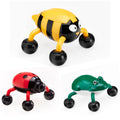
- Pick ordinary-looking fidgets. Putty in a tin or a wrist band draws less attention than a bright toy with a face.
- Agree a quiet signal. The pupil fetches the fidget without having to ask in front of everyone.
- Expect some novelty. Everyone will want a go at first. Keep the rules the same and the fuss soon dies down.
For more ideas, see our sensory-friendly classroom checklist.
Fidgets for older pupils and secondary school
Older pupils often want a fidget that nobody else will notice: plain, pocket-sized and nothing like a toy.

- Speks Gump: Six Miniature Smooth Stress Balls: small memory gel balls that are easy to carry in a school bag, desk drawer or pocket. They are not for chewing: check them regularly and stop using any that are punctured or leaking.
- Infinity Decompression Cube: a compact block of linked cubes that turns over and over in the fingers. Age 5+.
- Simpl Dimpl: a keychain fidget to push, poke and pop, with a mini carabiner clip for a bag, belt loop or keys. Its product page describes popping, so test it for noise first.
At secondary school, ask the SENCO to add the agreed fidget to the pupil’s support plan or one-page profile, so every subject teacher knows. For more grown-up choices, see our guides to toys for autistic 9 to 12 year olds and sensory toys for autistic teenagers.
Sending a fidget to school: a note for parents
- Ask the class teacher first. Each school has its own approach. If your child has SEN support or an education, health and care plan (EHCP), ask the SENCO to record the fidget in their support plan or one-page profile.
- Send something quiet and sturdy that your child already uses well at home.
- Label it with your child’s name, on the fidget itself or on its tin or bag.
- Buy two the same: one for school and one for home.
- Agree how it comes home for cleaning, or if it breaks.
Questions teachers ask
Are fidget toys allowed in school?
It is the school’s decision. Many schools allow agreed fidgets for pupils who need them, with clear rules about where they are kept and when they are used. Check your school’s policy and talk to the SENCO.
Which fidget toys are quiet?
Putty, squeeze balls and stretchy or textured fidgets, because they work by touch. Fidgets with buttons or bubbles make a sound: the Anti-Stress Fidget Cube has three buttons that click audibly, and the Push ‘POP’ Bubble Fidget Toy makes a slight popping sound. Test any fidget yourself first.
Should every child have one?
No. Fidgets are for pupils who need something in their hands, agreed with the teacher and, where there is one, the SENCO or the child’s OT. A class fidget box that anyone can borrow from, if your school’s policy allows it, means one pupil’s fidget is less of a surprise.
What is in a fidget bag for school?
A few small fidgets in a bag that lives in a drawer or on a peg. Our Going to School Personal Kit: Fidget Resources holds a Bendy Monster, Rainbow Fidget Ball, Knitting Ball, Spiky Wrist Band, Discovery Bag and Push ‘POP’ Bubble Fidget, which makes a slight popping sound. To make your own, choose three or four fidgets from this guide and label the bag.
Can our school order on a purchase order?
Yes. In the basket, answer “Yes” to “Ordering for a school or organisation with a purchase order (PO) number?” and type your PO number. At checkout, choose “Purchase Order (Schools & Nurseries)”, and we email you an invoice with your PO number on it. Standard UK delivery is free on orders over £45 ex VAT.


