






Good toys for an autistic child aged 6 to 8 give busy hands something quiet to do in class, give energy somewhere to go at home, and give a curious mind things to build, test and watch. This guide to toys for autistic 6 to 8 year olds is for parents, carers and teachers. It covers school fidgets, movement and balance, building, science and light, a calm-down kit for home and games siblings can join in with.
Age is a rough guide for autistic children. Plenty of 7 year olds still love toys made for toddlers, and some 6 year olds are ready for our guide for 9 to 12 year olds, so follow your child and check the age mark on each product page. For a wider choice, browse our sensory toys for autism and ADHD.
What to look for at this age
- Something small enough for school. The school day asks for more sitting and listening as children move up through primary school. A quiet fidget that fits in a pencil case is often more useful than a big toy, as long as the teacher is happy with it.
- A way to move. Many children come home with energy to burn after holding it together all day. Toys to rock, wobble and balance on give that energy somewhere to go on wet afternoons.
- Things to make and change. Many autistic children enjoy making the same model again and again, adjusting one detail each time. Open-ended building sets let them follow their own plan.
- A link to their favourite subject. Dinosaurs, space, vehicles or animals: a toy connected to a strong interest is far more likely to be played with.
- Age marks and small parts. Many toys here are marked 3+, one is 4+, and some have no age mark. For a child who still mouths things, stick to larger items and save anything with small parts for supervised play.
Fidget toys for autistic 6 to 8 year olds at school
A school fidget should be small, quiet and easy to put away. Check with the teacher first, and agree where it lives when it is not in use.

- Fidget Cube: each of its six sides has something different to do, from a switch and a joystick to gears and a rotating dial. On the button side, three buttons click and two press silently. Popular last Christmas.
- Tangle Junior Classics: a brightly coloured, ever-twisting classic Tangle, 215mm long. Colours may vary. Age 3+.
- Squishy Tentacle Ball: long, stretchy tentacles around an air-filled centre, 130mm across and easy to catch at playtime. It comes in six colours and was one of our best sellers last Christmas.
- Simpl Dimpl: a keychain fidget to push, poke and pop, with a mini carabiner clip for a book bag or belt loop. Colours may vary.
- Going to School Personal Kit: Fidget Resources: six tactile items, including a Push ‘POP’ Bubble Fidget, a spiky wrist band and a bendy monster, in a storage bag that can hang on a cloakroom peg or go in a book bag. Age 3+.
Find more pocket-sized options in our fidget toys.
Tip: Let your child choose the school fidget from two or three you are happy with. Having a say makes it more likely they will use it, and a spare at home means a lost fidget is not a disaster.
Toys for movement and balance
Rocking, bouncing and balancing are some of the ways children like to move. These toys bring that movement indoors.

- Teeter Popper: children sit, lie or stand on it to rock and roll, and the fourteen suckers underneath pop loudly on a hard floor. It is 720mm long, with two grip handles, and is marked ages 3+. Colours vary.
- Intelligent Balance Board: a solid wood rocker with light-guided game modes that respond as your child sways and shifts position. It is suitable from age 2 and sturdy enough for grown-ups, so parents can have a turn too.
- Balance Stepping Clouds: four tactile clouds with dot or stripe patterns to stand on or walk across. The soft tops can be inflated to different levels to make them easier or harder, and they store in their own bag.
- ‘Wobble’ Air Cushion: a 350mm textured air cushion to sit on at the table, or stand on for balance games. Popular last Christmas.
For more ideas, see our balance and movement toys and wobble cushions and sensory seating.
Tip: Set up a short obstacle course along the hallway: wobble cushion, stepping clouds, then three rocks on the Teeter Popper. Let your child change the order, and take turns timing each other.
Building and construction toys
Building toys reward planning, patience and having another go, and there is no right or wrong answer.

- Snap Cubes: 100 plastic 2cm cubes in ten colours that connect on all six sides and twist apart easily. A teacher’s guide is included, so the same set works for models and for maths games.
- Mix or Match Magnetic Dinosaurs: chunky magnetic pieces to build favourite dinosaurs or mix into brand new creatures. A good choice for a dinosaur fan who likes to make up stories.
- Magic Motion Sand Set: a 2.5kg bag of Magic Motion Sand in the colour you choose, a sand moulding set and a storage bag (the tray is not currently included). Marked age 3–99 years, with adult supervision recommended. For towers, stairs and stone walls, add the 10-piece Building Tool Mega Set (ages 3+, sand not included).
There are more construction and number toys in our engineering and maths range.
Tip: Take a photo of a favourite build before it is taken apart. A folder of model photos becomes a set of plans to follow next time, and can make tidying up easier to accept.
Science and light toys
Many 6 to 8 year olds want to know how things work. Toys that play with light, colour and nature turn those questions into something to try at the kitchen table.

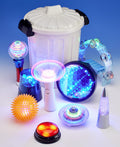
- Flexi Design Spinning Light: each new arrangement of its flexible clear tubes gives a different light pattern when it spins, so it works like a simple experiment: move one tube, switch on and compare. It stands 150mm high with 3 x AAA batteries included, and was one of our best sellers last Christmas.
- Rainbow Maker: projects a multi-coloured rainbow arc onto walls and ceilings, a starting point for talking about light and colour. It needs 4 x AAA batteries.
- Colour Mixing Glasses: chunky glasses with slot-in lenses, two each in red, yellow and blue, plus two distortion lenses to see like an insect. A colour mixing guide is included. Age 3–10 years.
- Big Bug Magnifying Jar: a shatterproof plastic jar with a 3x magnifying lens in the lid and a carry handle, for a closer look at minibeasts, shells or pebbles before they go back outside. Ages 4+.
Browse more STEM toys and light-up sensory toys.
A calm-down kit for home
A calm-down kit is a box or basket of favourite sensory things your child can reach for when the day has been a lot. Sensory toys for an autistic 8 year old don’t need to be complicated: a few things to watch, hold and hear less of, kept somewhere quiet. Let your child help choose what goes in.

- Sensory Timer Selection: a liquid visual timer, an oozy gunge timer and a wavy timer, 100–130mm high, to turn over and watch. Popular last Christmas. Age 3+.
- Weighted Sensory Snake: around 1.7kg of beads inside a plush snake that can hang across the shoulders or curl up on a lap at story time. Popular last Christmas. Always use weighted resources under constant adult supervision.
- Seth the Sloth Cosy Warmie: a 300mm plush sloth, weighted at 2lbs, that warms in the microwave in two minutes and gives off a lavender scent. An adult should warm it, and heat-up toys should only be used under adult supervision. Popular last Christmas.
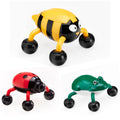
- Vibrating Animal / Bug Massager: pick from three characters, each light and easy to hold, that give a gentle vibration once switched on. Marked age 3+ and powered by 2 x AA batteries, it is for use under adult supervision. One of our best sellers last Christmas.
- Luna the Calming Kitty: press her paw and her light glows and fades in three breathing patterns for your child to follow, with six double-sided pattern cards. She doubles as a night light in five colours, and the micro-USB charging cable is included.
- Children’s Ear Defenders: padded, foldable and 160g, with an SNR 23.4 dB attenuation value. Their listing covers 6 months to 16 years, and they were popular last Christmas.
Find more ideas in our calming sensory toys and weighted toys and lap pads.
Tip: Introduce the kit on a good day, not in the middle of a hard moment. Try each item together a few times so it already feels familiar when your child needs it.
Games to play with brothers and sisters
Clear turns, short rounds and a bit of luck give brothers and sisters of different ages an equal chance.

- Light Up Push Popper Game: pop each bubble as it lights up, then press the back panel to reset before time runs out. There are five game modes, including a multiplayer mode, and the volume is adjustable. Age 3+; it needs 3 x AAA batteries.
- Jungle Rescue Fine Motor Game: spin, then use the tweezer tool to free the matching animal from the vines. The first player to rescue one of each animal wins, and using more or fewer vines changes how hard it is. Age 3+.
- Emotions Fishing Game: up to four players fish for face discs with magnetic hooks, then talk about the feeling on the face they catch. Ages 3+.
See all our activity games.
Playing together
- Join in their way first. Copy what your child is doing with a toy before suggesting something new. Once they see you are interested, they are more likely to welcome your ideas.
- Make turns easy to see. A sand timer, a “my turn” card or passing a soft toy shows whose go it is and when it ends, which can make sharing with a brother or sister feel fairer.
- Stop while it is going well. Two or three short rounds that end happily beat one long game that falls apart.
- Warn before the end. Say how much is left (“two more turns, then tea”) and have a set place for the toy to go back to.
Questions parents ask
What are good toys for an autistic 7 year old?
Start with what your child already enjoys and build on it: a light toy for a child who loves to watch things spin, a balance board for a child who is always on the move, a building set for a child who likes to line things up. Add one small, quiet fidget for school, agreed with the teacher.
Can my child take a fidget toy into school?
Ask the class teacher or the school’s SENCO first, as every school handles this differently. If your child has SEN support, ask for the fidget to be noted in their plan so every adult in the class knows it is allowed.
My 8 year old still loves toddler toys. Is that a problem?
Not at all. Many autistic children enjoy cause and effect and light-up toys for years after their classmates move on. Let them enjoy what they love at home, and offer one or two older-looking choices for school if they want them.
What if my child still mouths toys?
Stick to chunky toys with no small parts and stay close during play. A 3+ mark applies whatever your child’s age. For a child who needs to chew, our chewy necklaces and chew toys are designed for it. We recommend all chews are used under constant adult supervision.


