

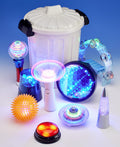

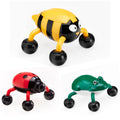

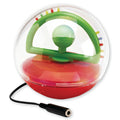
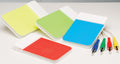


Good toys for autistic children fit the child: what they love, how they react to light, sound, touch and movement, and the way they play right now. Follow the age mark for safety, but otherwise choose for your child as they are today. This guide explains how to choose, then suggests a handful of toys for each age, from toddlers to teenagers, with a link to a fuller guide for every age band. Every pick is from our own range, and details such as age marks and batteries come from the product pages.
There is no single list of toys for autism that suits every child. The toys that work are the ones a child keeps coming back to, and those are different for every family. If you would rather browse everything in one place, see our sensory toys for autism and ADHD.
How to choose toys for autistic children
Four questions will narrow things down quickly: what does your child love, how do they respond to the senses, how do they play at the moment, and what does the age mark say?
Follow their interests
Interests are the quickest route to a toy that gets played with. A child who loves trains may enjoy anything with wheels and a track. A child who loves water may want toys that pour, squirt and float. Many autistic children have one or two deep interests, and a toy that connects to them is often the one they return to, long after the newer toys are forgotten.
Notice whether they seek or avoid sensory input
Many autistic children notice light, sound, touch and movement more, or less, than other people do. Some go looking for input: they spin, bounce, crash into cushions, chew their sleeves or watch lights from the corner of their eye. Others steer clear: they cover their ears, pull away from certain fabrics or squint in bright rooms. Most children do a bit of both, depending on the sense and the day.
- Children who seek input often enjoy toys that vibrate, light up, spin, pop or feel heavy.
- Children who avoid input often prefer toys they control: an on and off switch, a gentle sound, a soft surface, or a light that changes slowly.
Choose for their stage, not just their age
Autistic children often develop unevenly. A seven-year-old might read fluently and still love a toddler’s pop-up toy, and a teenager might want a light projector for their room and a soft toy for bed. Buy for how your child plays now. For older children, think about how a toy looks as well as what it does, because many prefer things that do not look like toys, especially at school.
Check age marks and supervision notes
Age marks such as “Age 3+” or “not suitable for under 3” often relate to small parts. Follow them for any child who still mouths toys, however old they are. Read the supervision notes too: our weighted lap pads, for example, should always be used under constant adult supervision, an adult should heat Cosy Warmies and stay with the child while they are used, and we recommend constant adult supervision for every chew. Check each product page for battery details, and only expect batteries to be included where the page says so.
Toys for autistic toddlers (2 to 3 years)
At this age, look for sturdy toys with big pieces and one simple, satisfying action. All five are marked as suitable for children under 3.

- Inny Bin: six chunky shapes, each with its own texture, to push in and pull out through the elastic bands of a cube. Age 18 months+.
- Rainbow Soft Ball: a soft, see-through ball, 160mm across, with small coloured balls inside that tumble about whenever it is rolled or shaken. Age 6 months+.
- Rainbow Colour Blocks: 24 translucent blocks in six shapes and four colours, for stacking, building and looking through to see the room change colour. Age 12 months+.
- Smartmax Magnetic Safari Set: 18 colourful pieces in all. Extra-large, soft-touch animal parts click onto magnetic bars to build six safari animals, or mix them into silly new ones. Age 12 months+.
- Huey the Fine Motor Hippo: a friendly hippo with five colourful birds, which children play with using a whole-hand twisting grip. Age 18 months+.
For cause and effect, light and sound, bath toys and a section for three-year-olds, read our guide to the best toys for autistic toddlers.
Toys for autistic 4 and 5 year olds
Starting school brings new routines, so toys that echo the classroom are a good bet: bucket time, timers, turn-taking games and fastenings. Expect most toys at this age to carry a 3+ or 4+ mark.

- Flexi Design Spinning Light: a light-up toy children can redesign. Move the flexible clear tubes to new holes, switch on and get a different pattern of lights each time. 150mm high, with 3 x AAA batteries included. One of our best sellers last Christmas.
- Attention Autism ‘Lights & Sounds’ Bucket Time Kit: nine toys, from a police light to an answer buzzer, packed in a lidded bucket and ready for bucket time at home. Age 3+.
- Big Red Timer: a large clock face, 190mm across, with a red section that shows how much time is left before the next thing happens.
- Penguin Ball Popper: a squeeze toy that sends soft foam balls flying, which makes an easy first game of taking turns. Age 4+.
- Undo-Me Cube: zips, buttons, buckles, laces and more on one soft cube, for practising the fastenings on school clothes. Age 3+.
- Natural Magic Motion Sand: kinetic sand, soft and tactile, for squeezing and shaping on a tray at the kitchen table. Suitable for 3 years+.
There is much more in our guide to the best toys for autistic 4 and 5 year olds.
Toys for autistic 6 to 8 year olds
From six, many children want something to fiddle with at school, ways to move, and games they can play with brothers and sisters. A quiet space at home matters too.

- Fidget Cube: a cube with a switch, a dial, buttons, gears, a joystick and a side modelled on worry stones, for rubbing. Three of the buttons click and two press silently. Popular last Christmas.
- Wobble Air Cushion (small): a textured, air-filled cushion, 350mm across, to sit on at a desk or stand on for balance games. Popular last Christmas.
- Prismatic Projector: a set of three hand-held projectors whose diamond-etched spheres throw moving patterns around a darkened room. 200mm, with 3 x AAA batteries included. Popular last Christmas.
- Light & Sounds Answer Buzzers: four buzzers, each with its own colour, light and sound, for family quiz games and taking turns. Ages 3+; they need 8 x AAA batteries.
- Weighted Sensory Snake: a long plush snake weighted with roughly 1.7kg of beads. Try it across the shoulders during a film, or curled on the lap while reading. Popular last Christmas. Always use weighted resources under constant adult supervision.
Our guide to the best toys for autistic 6 to 8 year olds has more ideas for school, play and home.
Toys and gifts for autistic 9 to 12 year olds
Older children often want things that look less like toys: something to fiddle with under the desk, lighting for their room, and tools that let them do more for themselves.

- Crazy Aaron’s Thinking Putty, mini tin: putty in a pocket-size tin. The design is a surprise unless you request one. Age 3+.
- Tangle Junior Textured: a textured fidget, 175mm long, with contrasting colours and varied textures to run fingers over.
- Tactile Sequin Weighted Lap Pillow: stroke the sequins one way for blue and back the other way for gold. It weighs about 1.4kg and measures 360 x 250mm. Popular last Christmas. Always use weighted resources under constant adult supervision.
- My Very Own Moon: a model moon that lights up in 12 phases, from new moon to full moon, changed by remote control. It takes 4 x AA batteries in the moon and 2 x AAA in the remote.
- Twist Time Timer: twist to set up to 90 minutes, then watch the time count down in numbers and segments. It stays silent until the alarm, has a magnetic back and needs 1 x AAA battery, not included. Not suitable for under 3s.
- Children’s Ear Defenders: folding ear defenders with a padded headband and an SNR rating of 23.4 dB. They weigh 160g, and the product page gives an age range of over 6 months to 16 years.
See our guide to toys and gifts for autistic 9 to 12 year olds for more.
Sensory toys for autistic teenagers
Teenagers deserve choices that respect their age and privacy. Let them pick, and look for things that do not look like toys and that they can use on their own.

- Laser Sphere: a colour-changing mood light that turns into a light show on the ceiling when the top comes off. It runs from the AC adaptor supplied. It is marked Ages 14+, so it is for teenagers aged 14 and over.
- Ark’s Chewable Loop: a slim chew necklace designed for a more discreet look, 51mm, in two colours. Please use it, like any chew, under constant adult supervision.
- Head Tingler: hold the handle and move the tipped pins slowly over the scalp. It is quick to try, and easy to put away if it is not for them. Popular last Christmas.
- Vibrating Sensory Cushion: a cushion that vibrates while it is pressed. It comes in ten colours, including navy blue, silver and cream, and needs 2 x D batteries. One of our best sellers last Christmas.
- Pocket Time Timer: a 75mm square visual timer with a clear cover that flips open to make a stand. Useful for homework, chores and getting out of the door on time.
Read our guide to sensory toys for autistic teenagers for more grown-up picks.
Play ideas that work at any age
- Play alongside, then pause. Sit next to your child and do what they are doing with a toy of your own. Then wait. A pause leaves room for your child to look up, reach over or invite you in.
- Ready, steady… go. Build up a pause before a ball pops, a top spins or a light switches on. Waiting for “go” is a game in itself, and some children start to say it for you.
- Make a den. A blanket over a table, a cushion and a few light-up toys make a space for watching lights, reading or simply being alone for a while.
- Tidy up with a timer. Pair a sand timer or visual timer with a “finished” box, so the end of play follows the same pattern each time.
- Try the same idea through another sense. If your child loves watching things spin, look for something that spins and hums, or spins and lights up. A new toy that feels familiar is easier to try.
- Give everyone their own. In games with brothers, sisters or friends, one toy each means nobody waits too long for a turn.
Questions parents ask
What toys are good for autistic children?
Toys that match your child’s interests and sensory preferences, and that suit how they play now. Cause and effect toys, light-up toys, fidgets, weighted items and timers are popular choices, but the right toy is the one your child keeps going back to.
Is there such a thing as autistic toys?
Not really. When people search for autistic toys, they usually mean sensory toys: toys with lights, sounds, textures, movement or weight. Any child can enjoy them, and plenty of autistic children love ordinary toys too.
My child is older but loves toys for little ones. Is that OK?
Yes. Let your child play at the level that feels right to them. Age marks are the exception: a toy marked 3+ often has small parts, so keep it away from any child who still mouths toys, even a much older one. If your child wants to blend in at school, look for grown-up versions of the same feeling, such as a putty tin instead of a squeaky toy.
What if my child chews everything?
Offer something made for chewing in place of things that are not. Our chew toys and chewy necklaces come in a range of shapes and strengths. We recommend all chews are used under constant adult supervision. Keep toys with small parts out of reach.
Can schools and nurseries order on a purchase order?
Yes. Add your PO number in the box in the basket. Every price is shown both ex VAT and inc VAT, and orders over £45 ex VAT get free standard UK delivery.


