



A sensory circuit is a short run of physical activities, usually 10–15 minutes long, done in three parts in the same order every time: alerting, organising and calming. Many UK primary and special schools run sensory circuits for a small group of pupils, often first thing in the morning or after lunch. This guide for teachers, teaching assistants (TAs) and special educational needs coordinators (SENCOs) covers who a circuit is for, sensory circuit ideas for each part, how to run a sensory circuit, safety and equipment, with a printable plan at the end.
You can start with a clear floor and a wall. When you want to add kit, see our sensory circuit equipment collection.
What is a sensory circuit?
A sensory circuit is a planned set of short physical activities that pupils work through one after another, like a mini PE circuit, in three parts:
- Alerting: quick, bouncy movement, such as jumping, hopping and bouncing.
- Organising: balancing, aiming and remembering a sequence of moves, such as stepping stones, balance boards and throwing at a target.
- Calming: slow, heavy work and firm pressure, such as wall push-ups and carrying something heavy, ending with a quiet minute or two.
Most school circuits last about 10–15 minutes, though some are shorter and some run to 20, with one to three activities in each part. Many schools run one first thing in the morning, and some run another after lunch. Because it goes from the liveliest activities to the slowest, the circuit always ends with the quietest part, just before pupils walk back to class. These timings are common practice, not a rule: fit them to your pupils and timetable, but keep the three parts in the same order and the routine the same each day.
Who is a sensory circuit for?
Many schools run a circuit for a small group rather than a whole class. Places often go to pupils with special educational needs (SEN), including some autistic pupils and pupils with ADHD, and to pupils who are always on the move, find balance and coordination hard, or find the start of the day difficult. Four to six pupils with two adults is a manageable group.
How schools choose pupils
- The class teacher notes what they see over a week or two, such as a pupil who avoids PE equipment or finds it hard to sit on the carpet.
- Talk to the SENCO, who knows which pupils already have support plans.
- If the child has an occupational therapist (OT), ask them which activities suit that child.
- Ask the family what their child enjoys or avoids, such as trampolines, swings or roundabouts.
- Agree a start date and a review date, such as the end of the half term.
Alerting: bounce, hop and jump
Start with a few minutes of quick, rhythmic movement. Put on upbeat music and offer a choice of two activities where you can.

Alerting ideas
- Space hopper bounces to a line and back.
- Seated bouncing on a large ball, feet flat on the floor. An adult can kneel in front and hold the pupil’s hands or hips.
- Jumping paths: two-footed jumps along a line of foot markers, then hop back.
- Star jumps and animal moves: bunny hops, frog jumps, crab walks and skipping need no equipment.
- Rocking: sit, lie or stand on a rocking board and rock it.
- A short spin the child controls: a few turns on a spinning seat, with the pupil in charge of the speed and when to stop. Spinning is the strongest movement in the circuit and can make some children dizzy or sick, so include it only for pupils whose OT, or the SENCO and family, have agreed it. Never spin a pupil yourself.
Equipment for alerting
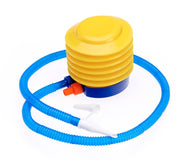
- Space Hopper: the old favourite to bounce up and down on, 600mm across, with a foot pump.
- Hop Fantasy: a clear hop ball covered in small multi-coloured stars, for ages 5+, with a recommended maximum weight of 45kg.
- Sit On Balance Ball: a heavy duty moulded vinyl ball that supports up to 300kg, 450mm across, or 550mm for taller pupils.
- Teeter Popper: rock and roll on it sitting, lying or standing. Its fourteen suckers pop loudly on hard floors, so warn pupils who dislike sudden noise. Ages 3+, and often ordered by schools and nurseries.
- Carousel: a moulded seat on a turning base that pupils move round by shifting their weight, where spinning has been agreed. Maximum weight 80kg.
- Bilibo: sit in it to rock or, where agreed, to spin, indoors or outdoors.
- Busy Body Cards: 16 photo cards of action poses, with three challenge levels and an ideas guide.
Organising: balance, aim and plan
The middle part is steadier. These sensory circuit ideas ask pupils to think about each move: where to put their feet, when to let go of a bean bag, what comes next.

Organising ideas
- Stepping stones: cross without touching the floor, then try it sideways.
- Balance boards: keep a board level for a count of ten, or tilt it to steer a ball round a track.
- Scooter boards: lie on the tummy and pull along a line with the hands.
- Bean bags at a target: throw them into rings laid flat on the floor, calling out a colour or letter to aim for.
- Crawling: commando crawl under a PE bench, or bear-walk along a path of hand and foot markers.
- Obstacle sequences: stepping stones, then the scooter line, then a throw, with picture cards showing the order.
Equipment for organising
- Riverstones: a set of six stepping stones, listed in two sizes: 430mm and 9cm high, and 250mm and 4cm high.
- Sensory Stepping Domes: six coloured domes with round knobbles on top, 160mm in diameter and 90mm high.
- Trace and Balance Skills Board: a wobble board with four wooden balls. Pupils stand on the footprints and tilt the board to roll a ball along the trail paths. Age 3+.
- Rhombic Scooter: a heavy duty scooter board, 400mm square, with built-in protective handles and non-marking wheels.
- Floor Surfer: a scooter board with screened wheels and a raised front that supports the breastbone when lying down. Age 2+, maximum load 100kg.
- Alphabet Bean Bags: a bean bag for each letter from A to Z. Not suitable for under-3s, as they contain small parts.
- Giant Activity Rings: nine rings in three sizes and three colours, with Braille on each ring. The product page suggests them for throwing and aiming games and obstacle courses.
- Juggling Scarves: three light 600mm square scarves that float down slowly, so they are easier to catch.
Browse more in our balance and movement equipment.
Tip: scooter boards are for sitting or lying on, never standing. Keep fingers and hair clear of the wheels.
Calming: push, carry and rest
The last part is slow and heavy: pushing, carrying and firm pressure, then a quiet minute or two. Turn the music down or off and lower your voice.

Calming ideas
- Wall push-ups: hands flat on the wall at shoulder height, then ten slow pushes.
- Heavy carrying: carry weighted bean bags across the room, one at a time, into a bucket.
- Ball rolling: the pupil lies on their tummy on a mat while an adult rolls a large ball slowly over their back and legs, never the head or neck. Ask “firmer or lighter?” and stop as soon as the pupil says or shows they want to stop.
- Palm pushes: pupil and adult press palms together for a slow count of five.
- Lap pad and timer: sit with a weighted lap pad while a two-minute sand timer runs.
- Quiet watching: turn over a liquid timer and watch it to the end.
Equipment for calming
- Weighted Tactile Bean Bags: five bean bags in five different textures, 120mm x 90mm and 400g each.
- Senso Roll: a 500mm ball with small bumps; the product page suggests rolling it over the body. Often ordered by schools and nurseries.
- Weighted Lap Pad, 1kg: 600mm x 300mm. The product page suggests 1kg for children up to 10 years old and the 2kg lap pad for older children and adults.
- Tactile Weighted Noodle Cushion: a 1.3kg lap cushion, 500mm x 230mm, with hundreds of soft noodles on one side. Often ordered by schools and nurseries.
- Large Sand Timer: 160mm high and colour coded, from 30 seconds (red) to 10 minutes (orange).
- Sensory Timer Selection: a liquid visual timer, an oozy gunge timer and a wavy timer to turn over and watch. Age 3+.
See all our weighted toys and lap pads.
Supervision: several of our weighted products say to use them under constant adult supervision. Keep weighted items on the lap or shoulders, never over the head, neck or face. The pupil must be able to take the item off by themselves at any time, so never hold it in place, and ask the child’s OT, if there is one, which weight suits them.
How to run a sensory circuit
A circuit is easier to run and to follow when it looks the same every day.

- Space: a hall, a cleared classroom or a dry playground, with room around each station and mats where pupils jump, roll or balance.
- Time: a slot you can keep every day, such as the first 15 minutes of the morning, agreed with class teachers.
- Staff: one adult leads and calls each change; a second stays at the busiest station, usually the scooter or balance boards.
- Order: set the stations out in a loop, alerting, organising, calming, with the calming station nearest the door.
- Picture cards and floor markers: a card at each station shows what to do, hand and foot markers show where hands and feet go, and a strip of three pictures with a “finished” pocket shows how much is left.
- A timer and a record sheet: a big sand timer everyone can see, and a sheet for the date, who came, the stations done, what each pupil enjoyed or avoided and the adult’s initials. Review it with the SENCO each half term.
A 15-minute circuit, step by step
- Set out and check the equipment before pupils arrive.
- Collect the group and show today’s plan on the picture strip.
- Alerting: two activities, about two minutes each, with upbeat music.
- Organising: two or three activities at a steadier pace.
- Calming: one or two slow activities, finishing with a sand timer.
- Walk back to class together, then fill in the record sheet.
Equipment for setting up
- Foot Marks: six pairs of tactile rubber feet in six colours, each 225mm x 90mm.
- Hand Marks: six pairs of tactile rubber hands in six colours, each 190mm x 190mm. Ages 3+.
- MEGA Sand Timer: 300mm high, in 1-minute (green), 3-minute (yellow) or 5-minute (blue) versions, or as a set of three.
If your school uses the Zones of Regulation, a quick zones check-in fits easily at the start: see Zones of Regulation Explained.
Sensory circuit equipment: where to start
If you are buying, start with pieces that cover all three parts:

- Something to bounce on: a Space Hopper or a Sit On Balance Ball.
- Stepping stones: Riverstones or Sensory Stepping Domes.
- A balance board, such as the Trace and Balance Skills Board.
- Bean bags and a target: Alphabet Bean Bags and Giant Activity Rings to aim at.
- Something heavy: Weighted Tactile Bean Bags and a weighted lap pad.
- Floor markers and a timer: Foot Marks and a large sand timer.
Then add a scooter board and a Carousel or Bilibo. For one box of kit, the MEGA Balance & Movement Discovery Tub includes a rhombic scooter, riverstones, a Bilibo, a large air cushion and alphabet bean bags, among other things. Contents may change with stock, but are only replaced with items of equal price and merit.
Back in class, some pupils sit on a wobble cushion or a sit-on ball: see our wobble cushions and sensory seating. You will find most items in this guide in our sensory circuit equipment collection.
Adapting a sensory circuit
Change the activities to fit the pupils, but keep the order of the three parts.

Wheelchair users and pupils with limited mobility
Ask the pupil’s physiotherapist or OT first and follow their advice on positioning. Then work through the three parts from the chair. For alerting, try big arm movements with Dancing Ribbons (six hand straps, each with six 1-metre ribbons). For organising, throw at a target, catch scarves or roll across Sensory Tactile Floor Tiles, a set of four 300mm tiles filled with coloured liquid that swirls when pressed; the product page says they withstand the weight of wheelchairs. For calming, try palm pushes, or a lap pad with the OT’s agreement.
Pupils who avoid movement
Never force a pupil onto equipment. Let them watch first, choose activities that keep both feet on the floor, such as stepping along foot markers instead of jumping, offer a choice of two and hold a hand at balance stations.
Older pupils
Call it morning movement or a fitness circuit and run it somewhere private. Swap hoppers for star jumps and shuttle runs, add plank holds to the calming part, use harder Busy Body Cards and let pupils run the timer. Check weight limits as pupils grow: the Carousel takes up to 80kg and the Floor Surfer 100kg.
A classroom with no hall
Run a five-minute mini circuit in a corner: jumps along foot markers, a balance board or bean bags into a ring, then wall push-ups and a lap pad while a sand timer runs. Our guides to setting up a calm corner in the classroom and the sensory-friendly classroom checklist have more low-cost ideas.
Keeping a sensory circuit safe
- Supervise every station, and stay within arm’s reach at balance boards, scooter boards and anything that spins.
- Clear the floor and put mats down wherever pupils jump, roll or balance.
- Check footwear: follow your school’s PE rules. Socks on their own slip on hall floors.
- Keep to age marks and weight limits on each product page. For example, the Teeter Popper is marked 3+, Hop Fantasy is 5+ with a recommended maximum weight of 45kg, and Alphabet Bean Bags are not suitable for under-3s.
- Check equipment every time for flat balls, splits, loose wheels and worn handles, and wipe it down after use.
- Let the child control any spinning: include it only for pupils whose OT, or the SENCO and family, have agreed it, and keep it to a few slow turns, stopped whenever they want. Never spin a pupil or insist on spinning.
- Stop straight away if a pupil looks dizzy, flushed, pale, sweaty or sick, or seems upset. Sit them somewhere quiet, stay with them, tell the class teacher and note it on the record sheet.
- Check health care plans with the SENCO and the family before a pupil starts.
Questions teachers ask
How long should a sensory circuit last?
Most school circuits last about 10–15 minutes, and a few run to 20, with a few minutes on each part. A short circuit you can run every day is more useful than a long one you rarely fit in.
Why do the three parts go in that order?
The circuit moves from the liveliest activities to the slowest, so pupils go back to class straight after the quietest part, not from bouncing or spinning. Keep this order every time, even when you change the activities.
Do you need special equipment for a sensory circuit?
No. Star jumps, animal walks, crawling under a bench and wall push-ups need nothing. A few pieces add variety: something to bounce on, stepping stones, a balance board, bean bags, a lap pad and a sand timer.
Can our school order on a purchase order?
Yes. In the basket, answer “Yes” to “Ordering for a school or organisation with a purchase order (PO) number?” and type your PO number, which goes on the invoice. At checkout, choose “Purchase Order (Schools & Nurseries)”. Standard UK delivery is free on orders over £45 ex VAT.
Printable sensory circuit plan and equipment list
Print this page or save it as a PDF from your browser’s print menu.
Before you start
- Agree the group with the SENCO, class teachers and families.
- Ask each pupil’s OT, if they have one, which activities suit them.
- Check health care plans, age marks and weight limits.
- Book the same space and time every day.
- Choose a lead adult and a second adult.
- Set out the stations in order, ending near the door, with mats down.
- Print a record sheet and keep a pen with it.
Alerting (a few minutes)
- Bounce to the line and back on a space hopper or hop ball.
- Bounce gently on a sit-on ball, feet flat on the floor.
- Jump and hop along a path of foot markers.
- Do star jumps, bunny hops or crab walks from the movement cards.
- Rock on the rocking board.
- If agreed for this pupil, take a few slow turns on a spinning seat, child in control.
Organising (a few minutes)
- Cross the stepping stones without touching the floor.
- Balance on a board for a count of ten.
- Pull along a line on a scooter board, lying on the tummy.
- Throw bean bags into the rings.
- Crawl under a bench or along hand and foot markers.
- Catch a floating scarf.
Calming (a few minutes)
- Do ten slow wall push-ups.
- Carry weighted bean bags to a bucket, one at a time.
- Lie on the tummy for a slow ball roll over the back, if the pupil agrees; stop as soon as they say or show they want to.
- Press palms with an adult for a count of five.
- Sit with a weighted lap pad while a two-minute sand timer runs.
- Watch a liquid timer to the end, then walk back to class.