





A school sensory room is a dedicated, usually darkened space where pupils with special educational needs (SEN) spend planned time with equipment to look at, listen to, touch and control, such as a bubble tube, fibre optics, switches and soft seating. Planning one comes down to the right space, clear zones, equipment chosen for the pupils who will use it, a budget built in stages and simple safety rules. This guide to sensory rooms in schools is for SENCOs (special educational needs coordinators), teachers, teaching assistants (TAs) and school business managers, and ends with a printable planner.
Browse all our sensory room equipment, or if you have no spare room, go to dark dens, corners and trolleys.
How sensory rooms in schools are used
Schools tend to use the room in two ways.

- Timetabled sessions. A pupil or small group comes at a set time each week with a familiar adult. A pupil with profound and multiple learning disabilities (PMLD) might lie by the bubble tube and press a switch to change its colour. A small group might share the Interactive Infinity Tunnel, which comes with four Slimline switches so up to four pupils can each change the lights.
- Short planned visits. Some autistic pupils, and others who find a busy classroom hard, visit at a set time, such as after lunch, for a quiet break with an adult.
It is also used for switch work, sensory stories and therapists’ sessions, but never as a punishment or a place to leave a pupil alone. Before buying anything, list who will use the room, when and with whom: that decides the size, zones and equipment.
Choosing the space
Check each option with your site manager.
- Size. Fit the largest group you will bring in at once: pupils lying down, wheelchairs, any hoist and the adults supporting them, plus the equipment and a clear route round it.
- Blackout. Light effects need the dark, so plan blackout for every window and glazed door, with a light switch by the door. Ask your site manager to add the room to the school’s fire risk assessment, including emergency lighting.
- Power sockets. Bubble tubes, some wall panels and ceiling effects need the mains (check each product page). Ask a qualified electrician to add sockets where each item will stand, so no leads cross the floor.
- Air and heat. A small, blacked-out room warms up fast with a group and several lights on, so check the ventilation works with the blinds down.
- Flooring. Wipeable, with soft mats where pupils sit or lie.
- Access. Check the door width, turning space for wheelchairs and room for a mobile or ceiling track hoist.
- Storage. A cupboard for switches, small toys and batteries, and somewhere to charge rechargeable switches.
- A door with a vision panel. Staff can check on a session without opening the door. A flap on the corridor side keeps light out.
Sensory room ideas for schools: planning zones
Zones make a room easier to plan, wire and set up.

- A light zone. Often a bubble tube in a corner, with mirrors behind it and a cushioned Corner Bubble Tube Plinth in front, plus fibre optics and a projector.
- A soft and quiet zone. Bean bags and cushions in a dimmer corner, for lying down, looking and listening.
- An interactive or switch zone. A table or wheelchair-height surface with switches and switch adapted toys, near a socket.
- A tactile wall. Panels fixed where pupils can reach them standing, sitting on the floor or from a wheelchair.
Keep the middle of the floor clear for lying down and turning a wheelchair.
Bubble tubes, fibre optics, projectors and UV
Check how each light is powered, its size, and whether pupils control it or only watch.
Bubble tubes
A bubble tube, a tall column of water with rising bubbles and changing coloured light, is usually the room’s centrepiece.
- Interactive Bubble Tube with Button Switch: coloured buttons on the Button Switch turn the tube one of seven colours, and the white button stops and starts the bubbles. The rechargeable Button Switch comes with its charger and will also accept any switch. The tube operates on 240v transformed to 12v. The 1.5m tube is often ordered by schools and nurseries, and there is a 1 metre version.
- Standard Bubble Tube: a gentle colour change through the bubbling water, and pupils can touch the tube to feel the bubbles vibrate. For switch control, choose an Interactive Bubble Tube. It is 1 metre or 1.5 metres high, operates on 240v transformed to 12v and is made to order: allow 28 working days.
- Interactive Bubble Tube Package: a 1.5m Interactive Bubble Tube, a Softplay Plinth (900mm wide) with five built-in buttons for the colours and bubbles, two acrylic mirrors, a safety wall fixing bracket, a bubble tube pump and fitting instructions.
- Sensory Colour Wash Column: a bubble tube with no bubbles, for areas where water is not an option, with solid colours or eight moving colour modes set from the 8-way wireless switch that comes with it. Allow 28 days.
The Corner Bubble Tube Plinth (1000mm or 1200mm square, 300mm or 450mm high) and Bubble Tube Acrylic Mirrors, with fixing plates, are made to order: allow 28 days.
Fibre optics

- Fibre Optic Harness and Lightsource: 150 acrylic strands, 2m long, that change colour constantly along their length, with the lightsource included.
- Mini Fibre Optic LED Mushrooms: three fibre optic lamps, 220mm high, in blue, red and green. The batteries are included, so they need no socket. Often ordered by schools and nurseries.
Projectors and light effects
- Star Buy Projector Kit: a wall-mounted Mirage Effect Projector with a built-in wheel rotator and one 6 inch Effect Wheel of your choice, such as Space or Seaside. There is also a table top package.
- Fibre Optic Ceiling Star: a mirrored star with 100 fibre optic points of light, changing colour automatically (Colour Changing version) or from an 8-way wireless switch (Interactive version). It needs a mains supply on the ceiling and a suitably qualified person to install it, and ceiling fixings are not included.
- Star Show Projector: puts hundreds of white or colour-changing stars around the room. The 3 x AA batteries are included, and it is often ordered by schools and nurseries.
UV
- UV LED Lantern: a portable lantern giving out ultraviolet (UV) light that makes UV-reactive toys glow. It needs 4 x D batteries. Never shine UV light into anyone’s eyes.
See all our bubble tubes, fibre optic sensory lights and sensory projectors and room lighting.
Soft play, seating and tactile walls
Pupils spend much of a session sitting or lying down, so seating matters as much as lights.

Soft play and seating
- Exploration Bean Bag: bead-filled, moulds to the body and has a wipeable cover, 500mm, 700mm or 1000mm across. It is made in the UK: allow about 20 days, and give your colour choice in the gift message box at checkout.
- Waterproof Slab Bean Cushion: a big floor cushion when laid flat, a hammock-style bean bag on its side or a chair against a wall. Its page says it is made from “a flame retardant to BS:7176 (School/Educational Environment)”.
- Vibrating Sensory Cushion: vibrates while a pupil presses on it and stops when they let go. It takes 2 x D batteries and is one of the products schools order most from us.
Sensory wall panels
- Tubey Tactile Wall Panel: an abacus, ball tube, spirals, clatter balls, chains, shaped mirrors and hard and soft textures on one board, 1200mm wide and 1450mm high, with wall fixing brackets and a ball collection tray.
- Fibre Optic Tactile Wall Panel: a red switch lights a black fibre optic carpet, and a second switch lights fibre optics among the other textures. It is the same size as the Tubey panel and needs an electrical supply (240v transformed to 12v). Allow 20 days.
Browse our soft play and sensory seating and sensory wall panels.
Switches, switch adapted toys and sound
A switch adapted toy has a socket for an accessibility switch, so a pupil can turn it on with a press. Switches usually have a large 6.3mm (1/4 inch) or small 3.5mm (1/8 inch) jack plug, so match the plug to the socket. Our Jack Adaptor changes a small plug to a large one.

Switches and switch adapted toys
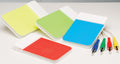
- Slimline Switch: 10mm high, with a large coloured plate that needs very little pressure. Often ordered by schools and nurseries. Call 01535 662812 to check its plug size.
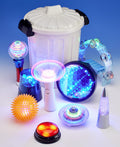
These four switch adapted toys are among the products schools order most from us:
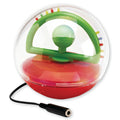
- LED Magic Power Globe: spinning, multi-coloured LED patterns. It accepts a 1/4 inch jack plug, and the 4 x AA batteries are included.
- Mega Infinity Tunnel: red, blue and green lights that seem to stretch back for ever, in a tunnel 210mm across. It needs 3 x AA batteries; the switch is not supplied.
- Fan with light: a cool blast of air, with the fan on high or low and the light at two strengths. It accepts a 1/4 inch jack plug and includes its 3 x AA batteries. Its page says it is not a toy and needs adult supervision.
- Bubble Machine: fill the reservoir with bubble liquid and press the switch to fill the room with bubbles. It accepts a 1/4 inch jack plug; the switch is not included.
Sound
- Musical Hand Wall: a soft wall pad, 1000mm square, with eight hand switches that play sounds such as a big drum or a lion roaring. It has 64 sounds, a volume control and a built-in speaker, and runs on 240v mains.
See all our switch adapted toys and switches and controllers, and our guide to gifts for children with complex needs.
Planning the budget in stages
You do not have to buy the whole room at once: building in stages gets pupils using it sooner and shows what they enjoy before the biggest purchases.

- The basics. Blackout, soft seating and a few light sources, such as the battery-powered Mini Fibre Optic LED Mushrooms, a projector and two or three switch adapted toys.
- A centrepiece. A bubble tube or colour column, once the sockets and wall fixings are ready.
- Walls, ceiling and sound. Panels, ceiling effects and sound, chosen from what pupils have enjoyed so far.
- Get a written plan. Draw where each item goes, which items need sockets and what is fixed to walls or ceilings. Get any fitting work planned in writing too, and share it with the head and governors.
- Buy things that can move. Battery lights, projectors, switches and bean bags work in a dark den or classroom too.
- Check lead times. Many larger items are made to order, with 20 days to 28 working days given on their pages, and many cannot go on next day delivery.
- Ask first. Email info@exploreyoursenses.co.uk or call 01535 662812 with any questions. Large orders can be placed online, by email or by phone.
See our guide to how schools pay for sensory equipment and our schools and nurseries page.
Safety and care
Water, electricity, heat and soft furnishings share one dark space, so plan for safety before the first session.
- Follow each product’s instructions, and keep them in a folder in the room.
- Check the electrics. Include every mains item in the school’s usual electrical safety checks, look over plugs and leads before each session and take anything damaged out of use.
- Secure the bubble tube. Fit it as its instructions say (the Interactive Bubble Tube Package includes a safety wall fixing bracket), keep its base and power supply out of pupils’ reach, and never let anyone climb on it.
- Look after the water. Regular use of Bubble Tube BCB Liquid, its page says, helps minimise the build-up of bacteria and algae in the water. Unplug a bubble tube before topping it up or draining it, and wipe up spills, including bubble machine liquid, at once.
- Clean between pupils. Wipe covers, switches and anything pupils hold or mouth, and check for damage as you go, such as split seams on bean bags.
- Take care with flashing lights. Flashing and strobe effects can trigger seizures in some people with photosensitive epilepsy. Keep flashing modes off as standard, and check the individual healthcare plans of any pupils with epilepsy before using them.
- Supervise every session. An adult stays with pupils throughout. Agree how long sessions usually last and how to end one early.
- Write a risk assessment covering the room, each item, hoisting, the temperature and getting out quickly in the dark.
- Keep to age marks on smaller items, and keep small parts away from pupils who mouth.
Tip: put a “how to switch everything off” card by the door for any adult to follow.
Running the room
- Timetable it. Give priority to pupils whose education, health and care plans (EHCPs) or support plans include sensory room time, then fill the gaps with short planned visits.
- Agree simple rules, such as an adult always in the room, shoes off on the soft play, no food or drink, and everything put back.
- Train every adult to switch each item on and off, connect switches, change batteries, look after the bubble tube and end a session when a pupil has had enough.
- Plan and record each session. Start and finish the same way each time, and note what the pupil chose, did and enjoyed.
- Involve the pupil’s therapists. Ask the physiotherapist about positioning, the qualified teacher of vision impairment (QTVI) about lighting and the speech and language therapist about switches. If the child has an occupational therapist (OT), ask them which activities suit that child.
- Review each term: what gets used, what is broken and what to buy next.
No room? Dark dens, corners and trolleys
Without a spare room, a dark den, sensory corner or trolley can bring some of the same equipment to pupils.

- Light Up Dark Den and Resource Kit: a 1000mm cube den with a sturdy cover that keeps light out, plus a mood light, an LED multi spinner and other light-up toys. Age 3+.
- Dark Den Time Fun Kit: a bag of light-up resources, including a Prismatic Projector, a Fibre Optic Ice Lamp and a Colour Changing Egg. One of the products schools order most from us.
- New Ultimate Sensory Trolley: cupboards and fold-out mirrored doors, with a bubble tube (or a colour change column), fibre optics, a Mirage Projector, a Rainbow Light, a speaker and a switch with 5-way control. It is 910mm long, 520mm wide and 1280mm high, and it can take up to 28 days to make.
A sensory corner can be as simple as a lamp, fibre optics and a bean bag behind a curtain. See our guide to setting up a calm corner in the classroom and our dark den resources.
Questions teachers ask
How big does a school sensory room have to be?
The Department for Education’s non-statutory area guidelines for special schools and other SEN provision (Building Bulletin 104) suggest 13–16 square metres for a sensory room used by pupils who walk, and 16–23 square metres for pupils who do not, enough for at least one pupil and one adult. Allow more for a group, its adults and any hoist.
Can pupils use the sensory room on their own?
Plan for an adult to be with pupils whenever the room is in use, and write this into your risk assessment.
Can we order sensory room equipment on a purchase order?
Yes. In the basket, answer “Yes” to “Ordering for a school or organisation with a purchase order (PO) number?” and type your PO number, then choose “Purchase Order (Schools & Nurseries)” at checkout. We then email you an invoice showing your PO number. Large orders, such as sensory room equipment, can also be placed by email or phone.
Printable sensory room planner
Print this page or save it as a PDF from your browser’s print menu.
The space
- Write down who will use the room, when and with whom.
- Check door width, turning space and room for a hoist.
- Plan blackout for every window and glazed door.
- Add the room to the fire risk assessment.
- Ask an electrician to add sockets where each mains item will stand.
- Check ventilation with the blinds down.
- Choose a wipeable floor and soft mats.
- Plan storage and a place to charge switches.
Equipment
- Draw the zones: light, soft, switch and tactile wall.
- List what each pupil will use and how they will control it.
- Check power, size and contents on each product page.
- Match switch plugs to toy sockets.
- Order made-to-order items first.
- Split purchases into stages.
- Get fitting work agreed in writing.
Safety
- Write a risk assessment for the room and each item.
- Add every mains item to the electrical safety checks.
- Fix the bubble tube as its instructions say.
- Keep power supplies, bases and leads out of reach.
- Check individual healthcare plans before using flashing modes.
- Agree a cleaning routine.
- Put a switch-off card by the door.
Running the room
- Put the timetable on the door.
- Agree the room rules.
- Train every adult who uses the room.
- Agree session lengths and how to end early.
- Keep a record for each pupil.
- Ask therapists about positioning, lighting and switches.
- Review the room each term.


