





To set up a calm corner in the classroom, pick a quiet spot that staff can see, add somewhere soft to sit, a gentle light and a few sensory tools, then teach the whole class how and when to use it. A calm corner, which some schools call a calm down corner or a quiet corner, is a small space where a child can choose to take a short break before going back to their work. It is never a punishment or a time-out. This guide is for teachers, teaching assistants (TAs), special educational needs coordinators (SENCOs) and nursery staff, with ideas for every age, including autistic pupils, and a printable checklist.
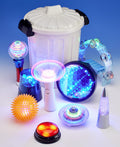
You do not need a big budget. A beanbag, a lamp, a sand timer and a few fidgets in a basket are enough to start. Browse our calming sensory toys for more ideas, or go straight to the checklist.
What is a calm corner?
A calm corner is a small, quiet part of the classroom set aside for short breaks. When the room gets too much, a child goes there, sits for a few minutes with something they like to hold or look at, and comes back when the timer ends.
- It is the child’s choice. A child asks to go, or says yes when an adult offers a break. Nobody is sent there.
- It is short. A few minutes, shown on a timer, then back to the lesson.
- It is not time-out, and not a reward. Nobody earns it and nobody loses it.
- It is for everyone. For a pupil with special educational needs (SEN), it may be written into their support plan, but any child can use it.
Where to put a calm corner
The spot matters more than the equipment. During a busy lesson, look for the quietest place an adult can still see.
- Out of the main walkway. Not by the door, the coat pegs, the sink or the route to the toilets.
- Away from the whiteboard. A back corner or side wall is less on show than the front of the room.
- In sight of staff. Mark the space with a rug or a low bookcase, but keep a clear line of sight. An adult should be able to see the child’s face from the teaching area.
- Away from glare and noise. Avoid bright windows, humming heaters and printers.
- In the same place every day. A corner that moves is harder to find when a child needs it.
Tip: sit in the spot yourself for two minutes during a lesson. Whatever you can hear, see and smell there, the child will notice too.
Calm corner ideas: seating and light
Start with somewhere soft to sit and a light that is gentler than the ceiling lights.

- Exploration Bean Bag: a bead-filled beanbag that moulds to the child’s shape, made from wipeable PVC-coated polyester, in 14 colours. The small size is 500mm across. It is made in the UK, so allow about 20 days for delivery.
- Exploration Square Cushions: four wipeable cushions, each 600mm square and 150mm high, also made in the UK.
- Waterproof Sensory Bean Bag: a fully waterproof, easy-to-clean beanbag, made in the UK in four sizes from 700mm across.
- Dark Den Disc Lamp: a 70mm LED lamp with a controller, so you can choose the colour and brightness and leave the flash and strobe settings off. It needs 3 x AAA batteries, which are not included. Often ordered by schools and nurseries.
- Colour Changing Crystal Light: a 100mm textured crystal that fades slowly from colour to colour. It takes 3 x AG13/LR44 button batteries (included) and is not suitable for under 3s. An adult should change the batteries and keep spares out of children’s reach. Often ordered by schools and nurseries.
Battery lights mean no cables to trip over. See more soft play and sensory seating and light-up sensory toys.
Sensory tools for the corner
Choose three to five tools, not twenty. A small, familiar set is easier to keep tidy and easier to choose from. Watch what each child reaches for, and ask them.

- Children’s Ear Defenders: one of the products schools order most from us. They weigh 160g, fold up small and have an attenuation value (single number rating, or SNR) of 23.4 dB, and are listed as suitable from babies over 6 months to 16 years old.
- Tactile Weighted Noodle Cushion: a 1.3kg cushion, 500mm by 230mm, with hundreds of soft noodles on one side for fingers to run through. Often ordered by schools and nurseries.
- Weighted Lap Pads: pads for the lap that can also go across the shoulders. The product page suggests 1kg for children up to 10 years old and the 2kg pad for older children and adults.
- Fidget Bag: a bag with pockets and different fastenings, filled with fidgets including a Wrist Squigglet, a Bendy Man, a Koosh Ball and an Atomic Bead Stress Ball. Put three or four in the basket and keep the rest for swaps. Often ordered by schools and nurseries.
Safety: weighted items go on the lap or shoulders, never over the head or face. A child must always be able to take a weighted item off without help. Never make a child use one, and never use one to hold a child still. Check seams regularly and stop using anything that splits. If the child has an occupational therapist (OT), ask them which activities suit that child.
Browse our weighted toys and lap pads and fidget toys.
Timers and feelings cards
A timer shows how long the break lasts, so nobody has to announce that time is up. Feelings cards let a child show how they feel, or what is bothering them, without having to find the words.

- Large Sand Timer: a 160mm timer, colour coded by length from red for 30 seconds to orange for 10 minutes. Keep a timer in the corner for the length you agree with each child, such as 3 or 5 minutes. Often ordered by schools and nurseries.
- Sensory Timer Selection: three liquid timers, 100mm to 130mm high, in which the flow of oil and water droplets shows time passing. Age 3+. Often ordered by schools and nurseries.
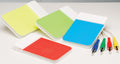
- Feelings Fan: 12 faces with matching words, including worried, cross, excited, sad and ill, so a child can point instead of explaining. Age 3+.
- Sensory Fan: nine symbols, including hot, cold, bright, noisy, crowded and uncomfortable, so a child can show what in the room is bothering them. Age 3+.
See all our visual timers and organisers.
How to introduce it to your class
Teach the calm corner like any other classroom routine: at a settled time, step by step, and more than once.
- Show it at an ordinary moment. Introduce it to the whole class on a quiet morning, not straight after an upset, and say what each item is for.
- Model a break. Sit there yourself, turn the timer, pick a tool, put it back and return to your seat, saying out loud what you are doing.
- Let everyone practise. Give each child a short turn in the first week, so the corner stops being new and exciting.
- Agree a signal. A break card on the desk, a hand sign or one agreed word. For children who find asking hard, an adult can offer quietly: “Would you like a break?”
- Use the timer every time. The child turns it over on arrival, and an adult checks in when it runs out.
- Plan the way back. Agree what comes next, such as “First a break, then two more sums”, and welcome the child back without a fuss.
- Keep the rules short. One child at a time, and tools stay in the corner.
Tip: put the rules on a card with a picture for each one, at the child’s eye level in the corner.
Keeping your calm corner working
- Keep it tidy. Give each item a home, such as a basket labelled with a photo.
- Rotate a few items. Swap one or two tools each half term, keep the favourites, and tell the class before anything changes.
- Clean and check weekly. Wipe covers and hard toys, check stitching, test batteries and remove anything broken. A Wipeable Weighted Lap Pad Cover fits all our lap pads and wipes clean between users.
- One child at a time, unless agreed. Some pairs share well, but agree it first.
- Notice patterns. If a child goes at the same time each day, such as before spelling, look at what happens then, and share it with your SENCO and the child’s family.
- Keep it positive. Never send a child there as a punishment, and never take it away as a sanction.
Calm corner ideas by age
The idea is the same at every age: a quiet place to take a short break.
Nursery and Reception (EYFS)
In the Early Years Foundation Stage (EYFS), a den or small tent with cushions makes a cosy space. Keep the opening facing the room so adults can see in. For babies and toddlers, stick to soft cushions, board books and a familiar soft toy. If a child falls asleep there, move them to their cot or usual sleep space.

The Light Up Dark Den and Resource Kit is a 1000mm cube with a sturdy cover that keeps the light out, and comes with light-up resources including a mood light and an LED multi spinner. It is marked age 3+, so use it where every child is 3 or over. See more in our dark den range.
Primary school
The basics in this guide are plenty for a primary classroom. Older juniors often prefer a grown-up look and a say in what goes in.
Secondary school
A corner in the classroom may not suit older pupils. Some secondary schools offer a quiet space instead, such as a room in the learning support base, with a pass a pupil can show to leave a lesson for an agreed time. Agree how the pass works with the pupil, their family and the SENCO, and tell every teacher. Discreet tools travel well, such as Crazy Aaron’s Thinking Putty in a mini tin (pocket-sized, age 3+) or a Simpl Dimpl, a small push-and-pop keychain with a carabiner clip.
No space? Make a calm box
If there is no spare corner, put the same things in a box or bag. The child takes it to their desk, a quiet table or an agreed spot outside the classroom with a TA.

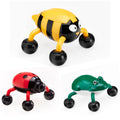
- Going to School Personal Kit, Calming Resources: a storage bag that hangs on a peg or fits in a book bag, holding air infusions, a hand massager, an octopus massager, a fidget cube, a nylon hand brush and a colour motion. Age 3+. Often ordered by schools and nurseries.
- Sensory on the Go Bag: a bag with four pockets, each with a different fastening, packed with a Sensory Fan, a Four Colour Liquid Timer, a Flexi Design Spinner, hand massagers and more. The product page recommends that all the toys are used under adult supervision. Often ordered by schools and nurseries.
Calm corners and the Zones of Regulation
Many schools use the Zones of Regulation, a framework that sorts feelings and energy levels into four colours: blue, green, yellow and red. If yours does, the calm corner is a natural home for zones tools.
- Use the corner in any zone. A child might go there when tired and low (blue) or fidgety and worried (yellow), not only when very upset.
- Do not tie it to the red zone alone. If the corner only ever means “red”, children may see it as the place you go when you are in trouble.
- Label tools by colour. A coloured dot on each basket helps a child find a tool for their zone.
Our guide to the Zones of Regulation explains the four zones, and our Zones of Regulation resources are sorted by zone colour.
Questions teachers ask
Is a calm corner the same as time-out?
No. Time-out is a consequence an adult decides on. A calm corner is a place a child chooses for a short break, or accepts when an adult offers one kindly.
How long should a child stay in the calm corner?
Usually a few minutes. Agree a length with the child, such as 3 or 5 minutes, and show it with a sand timer. When the sand runs out, an adult checks in. A second turn of the timer is fine if it has been agreed.
What if a child uses it to avoid work?
Look at when it happens. If a child always goes just before writing, the task may need adapting, or the child may need help to start. Keep the timer, plan a small first task for the return, and talk to your SENCO if the pattern continues.
What should a calm corner for autism include?
Ask the child and their family what they like and what they find hard. Many autistic children like a predictable space: the same place, the same few items and the same routine, with any change explained in advance. Ear defenders, a lamp with adjustable brightness, a weighted cushion, a timer and a feelings fan are common choices. If the child has an OT, ask them which activities suit that child.
Printable calm corner checklist
Print this page or save it as a PDF from your browser’s print menu.
Space
- Choose a quiet spot out of the main walkway.
- Check staff can see the child from the teaching area.
- Keep it away from the door, pegs, sink and whiteboard.
- Avoid window glare and noisy equipment.
- Mark the space with a rug or low furniture.
- Keep it in the same place every day.
What to put in it
- Add a beanbag, floor cushions or a soft seat.
- Use a lamp or soft light instead of the ceiling lights.
- Choose three to five sensory tools.
- Add a sand timer for the length of a break.
- Add a feelings fan or feelings cards.
- Keep ear defenders within reach.
- Offer a weighted lap pad or cushion if it suits the child.
- Put a few fidgets in a small labelled basket.
Teaching it
- Introduce it at a settled time, not after an upset.
- Model a break from start to finish.
- Give every child a short practice turn.
- Agree a signal for asking for a break.
- Use the timer every time.
- Plan a small first task for the return.
- Display the rules with a picture for each.
Keeping it working
- Give every item a labelled home.
- Wipe and check items for damage each week.
- Test and replace batteries.
- Swap one or two tools each half term.
- Keep to one child at a time unless agreed.
- Note patterns and share them with the SENCO.
- Never use the corner as a punishment.


