







A sensory-friendly Christmas keeps the parts your child enjoys and softens the parts they find hard: fewer surprises, less noise, plenty of warning and a quiet place to go. These autism Christmas tips are for parents and carers of autistic children and children with sensory differences. They cover getting ready, decorations, presents, visitors, food, outings, the day itself, school events and the days after, and the guide finishes with a printable checklist.
Every child is different, so pick the ideas that fit yours. If you are short of time, go straight to the checklist.
Getting ready: countdowns, calendars and stories
Christmas changes a lot at once: the house, the food, school and who is around. Most of it can be shown in advance.
- Make the countdown visible. A calendar with each day crossed off, a paper chain with one link torn off each night, or an advent calendar shows how long is left better than words alone.
- Put the big days on a visual calendar. Add a photo or drawing for each event: the school play, visitors arriving, Christmas Day, the first day back at school.
- Write a short social story. In plain words and from your child’s point of view, say what will happen and what they can do if it gets too much: “On Christmas Day, Nana and Grandad will come for lunch. It might be noisy. If I want a break, I can go to my room.”
- Show photos of places and people. The house you will visit, the people who are coming, the grotto or theatre. Last year’s Christmas photos are useful too.

Our Sensory Advent Calendar gives each day a small sensory toy, such as a liquid visual timer, a Squeezamal or a Disney Tsum Tsum, and keeps a reindeer Cosy Warmer for Christmas Eve, to be warmed and used with an adult. Choose 24 individually wrapped and numbered gifts, or a mini drawstring drop sack that you fill each night. The drop sack lets you show a child who dislikes surprises the next toy at bedtime. The calendar is marked 3+, but some items carry their own age marks (the Jingle Stick is 5+), so check each one. Items may be swapped for similar ones if something is out of stock.
Decorations, a little at a time
Waking up to a house that has changed overnight can be a shock, so change things slowly and let your child see it coming.
- Put them up gradually. The tree one day, lights the next, the rest over a week, with decorating days marked on the calendar.
- Choose steady lights. Flashing and chasing lights can be a lot. Use a steady setting if your lights have one, and switch them off at the same time each evening.
- Let your child help. They might choose where the tree goes, hang the same decoration every year or be in charge of the light switch.
- Keep one room unchanged. A bedroom or corner that looks just as it always does gives your child somewhere familiar.
- Check for surprises. Singing Santas, scented candles, crunchy tinsel and anything that moves on its own can catch children out.
Presents without the pressure
- Make opening easy. Use paper with very little tape, a gift bag or a box with a loose lid. If not knowing is the hard part, tell your child what each present is, or show them before you wrap it.
- Spread it out. A few presents after breakfast, a few after lunch and some saved for Boxing Day, with time to play in between.
- Test batteries first. Fit and test them before wrapping, and look for a volume switch on noisy toys. A toy that does not work, or is louder than expected, is a hard start to the morning.
- Drop the thank-you script. Tell relatives your child may not react the way they expect. A photo of your child playing with the gift later can say thank you instead.
Looking for ideas? See our guides to gifts for autistic children and sensory stocking fillers under £10.
Visitors and noise
Extra people bring extra noise, hugs, questions and smells. A little planning on both sides makes a difference.
- Tell your child who is coming. Show photos, say when visitors arrive and leave, and add it to the calendar.
- Brief your visitors. Ask them to say hello without expecting a hug, to let your child come to them, and not to mind if your child leaves the room.
- Agree a signal to leave the room. A word, hand sign or card that means “I need a break”. Practise it before the day, and make sure every adult knows to let your child go without questions.
- Warn about crackers and party poppers. Pull crackers at a set time, with ear defenders on or ears covered, or leave them out.
- Turn one thing down. If the television is on, turn the music off.

A pair of Children’s Ear Defenders is worth having to hand through December. Ours weigh just 160g, have a padded headband and fold neatly away, with an attenuation value of SNR 23.4 dB. There are four colours to choose from, and the product page gives the age range as babies over 6 months to 16 years old. Practise first: wear them during a favourite programme, then on a short trip to the shops.
Set up a quiet space
Even a good day can get busy. A quiet space is somewhere your child can go when everything gets too much, without having to explain.
- Choose the spot early. A bedroom, a pop-up tent or a corner behind the sofa, set up together a week or two before.
- Keep it familiar. Their own blanket and cushions, a favourite toy, and no decorations.
- Use soft, steady light. A small lamp or projector your child controls is gentler than overhead lights.
- Make it theirs. Visitors and other children stay out unless invited.

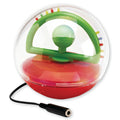
- Dark Den Disc Lamp: a 70mm LED lamp with a colour controller, so your child can choose the colour and brightness and leave the flash and strobe settings off. It needs 3 x AAA batteries, which are not included.
- Colour Changing Egg: a free-standing, rubbery white egg, 9.5cm, that moves slowly through rainbow colours. Batteries are included.
- Star Show Projector: puts hundreds of stars around the room, from a white light or a colour-changing one. The 3 x AA batteries come with it.
For more ideas, browse our weighted toys and lap pads and calming sensory toys.
Food: familiar is fine
- Serve what your child usually eats. If they would rather have their usual pasta than turkey, that is their Christmas dinner.
- No pressure to try. New foods can sit on the table without comment; looking, smelling or helping to cook all count.
- Think about the plate. Their own plate, cup and cutlery, with foods kept apart if they prefer.
- Keep the meal short for them. Your child can join for part of the meal and leave when they have finished.
- Watch the timing. If Christmas dinner is later than usual, offer a familiar snack at the usual mealtime.
Outings and visits
- Go at quiet times. Early mornings and weekdays are often quieter. Ask venues whether they run a quieter session.
- Keep visits short. One outing a day is plenty, and a short visit that goes well beats a long one that goes wrong.
- Show it first. Look at photos or a video of the grotto, theatre or relative’s house before you go.
- Plan how to leave. Agree a signal, park near the exit and warn your hosts you may leave early. Leaving early is part of the plan, not a failure.
- Pack a bag. Ear defenders, snacks, a drink and a favourite fidget or two.
- Santa is optional. Waving from a distance, posting a letter or skipping the grotto are all fine.

For queues and car trips, the Keep Them Busy Time Fun Kit packs ten small things into one bag, among them a wrist squigglet, a glitter tube, a rainbow fidget slug and a knitting ball. Age 3+.
A sensory-friendly Christmas Day routine
The day itself is the biggest change of all, so keep as many of the usual anchors as you can.
- Keep the bookends. Wake-up, mealtimes and bedtime near their normal times give the day a familiar shape.
- Show the plan. Draw a simple timetable: presents, breakfast, a walk, lunch, a film, bath, bed. Put it where your child can see it and tick things off together.
- Build in quiet time. Plan a break in the quiet space after lunch, before your child needs to ask.
- Warn before each change. A visual timer shows how long is left, which some children find easier than a spoken “five more minutes”.
- Let comfort win. Pyjamas or everyday clothes are fine; itchy jumpers and new shoes can wait.

- Big Red Timer: set the red disc by turning the handle on the back, and it shows at a glance how much time is left for an activity. It is 190mm across.
- Large Sand Timer: a 160mm timer you simply turn over, colour coded by length, from red for 30 seconds to orange for 10 minutes.
See all our visual timers and organisers.
Nativity plays and school parties
- Ask for details early. Dates, times, songs and costume, and whether school can share photos of the hall or a rehearsal video.
- Find a part that fits. Narrating, holding a sign, helping with the lights or watching a rehearsal instead are all ways to join in.
- Practise the costume. Try it on at home for a few minutes at a time, and swap scratchy parts for soft clothes in the right colour.
- Plan the party. Ask what will happen, and agree with staff where your child can go for a break and how they will ask.
- Take ear defenders. They are useful in rehearsals, the performance and the party.
- Make jumper day easy. A red T-shirt or a festive badge can count instead of an itchy jumper.
- Sit where you can slip out. An end seat near the door lets you leave quietly if your child needs you.
After Christmas: back to normal
- Put “decorations down” on the calendar. Some children want the house back to normal after Boxing Day; others want the tree up as long as possible. Agree a date and stick to it.
- Pack away together, or in one go. Let your child help, or do it while they are out if they would rather see it finished.
- Count down to school. Use the same calendar, with a photo of their teacher or classroom.
- Bring back the usual times. Move bedtimes and wake-up times back towards school days a few days before term.
- Try on uniform and shoes. A quick check a few days before saves surprises on the first morning.
- Note what worked. Jot down what went well and what you would change, ready for next year.
Questions parents ask
How can I make Christmas easier for my autistic child?
Give plenty of warning, keep some routine and have a quiet space ready. Show changes on a calendar, put decorations up slowly, keep meals and bedtime near normal and plan breaks into the day. Ear defenders and a signal to leave the room help with visitors and noise.
Is it OK to change our Christmas traditions?
Yes. Traditions are there for your family to enjoy, and they can change. You might open presents over two days, eat at your usual time, skip crackers or see relatives on a different day. Many families find their own way of doing Christmas that suits everyone.
What if my child does not want to open presents?
That is fine. Wrapping, surprises or a big pile of gifts can be too much. Try one present at a time, tell them what is inside, or leave some presents unwrapped. Opening can carry on over the next few days.
How do I explain Christmas changes to my child?
Use plain words and pictures. A short social story, a calendar with photos of the key days, and pictures of the people and places involved help your child see what will happen. Go over it often, and share any changes as soon as you know about them.
More Christmas guides
Printable sensory-friendly Christmas checklist
Print this page or save it as a PDF from your browser’s print menu.
Before December
- Put the key dates on a calendar your child can see.
- Choose a countdown: advent calendar, paper chain or crossing off days.
- Write a short social story about Christmas in plain words.
- Collect photos of visitors and places you will go.
- Ask school for the dates of the nativity, parties and jumper day.
- Get ear defenders or a visual timer and try them at home.
The week before
- Put decorations up a little at a time.
- Keep one room just as it always is.
- Set up the quiet space with soft light and a blanket.
- Fit and test batteries in new toys, then wrap.
- Agree a break signal and practise it.
- Tell visitors about hugs, breaks and the quiet space.
On the day
- Keep wake-up, meals and bedtime close to normal.
- Put a picture plan of the day where your child can see it.
- Open presents a few at a time.
- Offer familiar food, with no pressure to try new things.
- Use a visual timer before each change.
- Plan a quiet break before it is needed.
- Let comfortable clothes win.
Visitors and outings
- Show photos of who is coming and where you are going.
- Go at quiet times and keep visits short.
- Pack ear defenders, snacks and a favourite fidget.
- Warn before crackers, party poppers and loud games.
- Agree how you will leave, and leave early if needed.
After Christmas
- Mark the day decorations come down on the calendar.
- Pack decorations away together, or all in one go.
- Count down to the first day back at school.
- Move bedtimes back to school times a few days early.
- Try on uniform and school shoes.
- Write down what worked, ready for next year.


